





The Timeless Beauty and Cultural Significance of Leis in Hawaii
The Symbolism of Giving a Lei
Gifting a lei is a compelling expression of the Aloha spirit, symbolizing love, respect, and connection. Leis are exchanged during special events such as birthdays, anniversaries, weddings, funerals, and various celebrations. They represent well wishes and a deep bond between the giver and the recipient.
Beyond Flowers: The Varied Materials of Leis
While flowers (pua) are commonly used, leis can also be crafted from nuts, feathers, vines, leaves, shells, and seeds. Each material carries its own symbolism, adding to the lei’s meaning beyond its beauty. The circular design of a lei signifies never-ending love, making it a heartfelt gift.
The Lehua Blossom: Big Island’s Official Lei
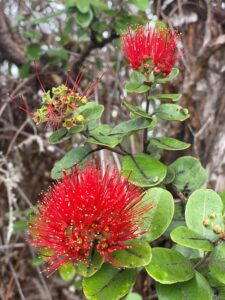
Each Hawaiian Island has its official lei. The Big Island’s lei is made from lehua blossoms, which grow on the native ‘ohi’a trees. These red, bottlebrush-shaped flowers are woven with leaves, and the tree itself holds a sacred place in Hawaiian culture. ‘Ohi’a trees, dedicated to the goddess Pele, were used in ancient times to ease childbirth pain. The lehua blossom also comes in yellow, white, and pink variations.
The Legend of ‘Ohi’a and Lehua
Hawaiian legends tell the story of ‘Ohi’a and Lehua. ‘Ohi’a, a handsome man, caught the eye of the goddess Pele, but his heart belonged to Lehua. In a fit of jealousy, Pele transformed ‘Ohi’a into a twisted tree. Lehua’s pleas for mercy led the other gods to turn her into the lehua flower, so she could forever adorn ‘Ohi’a and they could be together.

Lei Etiquette: Do’s and Don’ts
When Giving a Lei:
- Remove the lei from its container and gently place it around the recipient’s head and shoulders using both hands.
- Accompany the gesture with a honi (kiss on the cheek) or a hug.
- Do not hand over a boxed lei.
When Receiving a Lei:
- Never refuse a lei. Accept it by bowing your head, allowing the giver to place it on you.
- If you need to remove or adjust the lei, do so discreetly in private.
Special Considerations:
- Do not give a closed lei to a woman who is hapai (pregnant) or nursing, as it is considered bad luck. Instead, offer an open-ended lei (maile leis are popular) or a haku (head lei).
Proper Wear and Disposal:
- Wear the lei draped over your shoulders, hanging in the front and back.
- When disposing of a lei, do not throw it in the trash. Remove the fresh parts and return them to the ‘aina (land). Traditionally, they should go back to the area where the materials were picked. Non-natural fibers used to hold the lei together can be discarded appropriately.
Leis are a beautiful and meaningful part of Hawaiian culture, embodying the spirit of Aloha and the deep connections shared among people. Embrace the tradition with respect and understanding and let the beauty of the lei enrich your special moments.